
Are Water Softeners Bad for Septic Systems? The Truth
The Core Question: Does Salt Harm Septic Bacteria?
Yes — but the degree of harm depends on concentration, frequency, and your tank’s biological health.
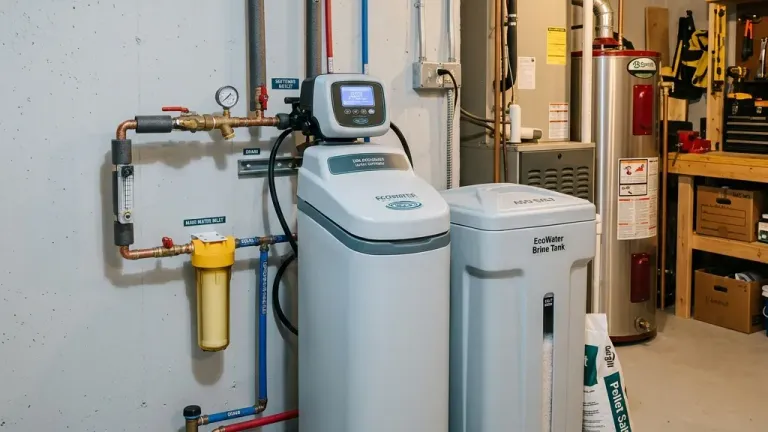
Water softeners work by exchanging calcium and magnesium ions (the minerals that cause “hard” water) for sodium ions. During the regeneration cycle, the softener flushes a concentrated salt brine solution through the resin tank and discharges the salty wastewater into your home’s drain system — which flows directly into your septic tank.
The concern is legitimate: high concentrations of sodium chloride can inhibit the biological activity of the bacteria that your septic tank depends on to function.
What Actually Happens During a Softener Discharge
A standard water softener regeneration cycle discharges between 50 and 100 gallons of brine solution into the drain system. For a 1,000-gallon septic tank with a normal working volume of 700 gallons of effluent, this represents a sodium loading event that temporarily raises the salinity of the tank.
Three Factors That Determine Impact
1. Tank size relative to brine volume. A 1,500-gallon tank dilutes the brine significantly more than a 500-gallon tank. Older homes with undersized tanks are more vulnerable.
2. Regeneration frequency. Softeners that regenerate nightly are far more disruptive than those programmed to regenerate only when needed (demand-initiated regeneration).
3. Existing bacterial health. A tank with a robust, diverse bacterial population can tolerate periodic salt loading better than a compromised system recovering from chemical exposure.
The Hydraulic Problem Is Separate From the Chemical Problem
Beyond the bacterial chemistry, water softener discharge creates a hydraulic overload risk that is often overlooked. During a regeneration cycle, 50 to 100 gallons of water enter the septic system over a relatively short period. If the drain field is already stressed, this sudden water load can push untreated effluent into the soil before the tank bacteria have processed it.
Nightly regeneration schedules on water softeners have been linked to accelerated leach field failure in systems that were already showing early signs of hydraulic stress. Switching to demand-initiated regeneration can reduce softener discharge volume by up to 50%.
— Residential Water Treatment Advisory
Is My Water Softener Damaging My Septic System Right Now?
Look for these warning signs that your softener discharge is already causing problems:
- Slow drains throughout the house that worsen in the days following a regeneration cycle.
- Unusual odors from drains or outdoors near the drain field after regeneration.
- Higher-than-normal sludge accumulation found during a professional pump-out inspection.
- Reduced soap lathering is the symptom that led you to the softener — but increased sludge in the tank may be the hidden cost.
What to Do: Practical Solutions
Option 1: Switch to Demand-Initiated Regeneration
The single most impactful change. Demand-initiated regeneration only triggers when the resin is actually exhausted — reducing the number of brine cycles from nightly to every 5 to 10 days for most households. This alone can cut softener discharge volume by 40 to 60%.
Option 2: Increase Tank Pumping Frequency
If you have a water softener, consider pumping every 2 to 3 years instead of the standard 3 to 5 years. The additional salt and water loading accelerates sludge accumulation.
Option 3: Add Biological Treatment After Regeneration Cycles
A monthly biological enzyme addition to the drain system after a regeneration cycle helps repopulate the aerobic bacteria that sodium disrupts. Biological treatments that specifically support bacterial recovery after chemical events are covered in our review of the best septic tank sludge dissolvers.
Option 4: Consider a Potassium Chloride Softener
Potassium chloride (KCl) is a less common alternative to sodium chloride for water softener salt. Potassium is actually a nutrient for soil bacteria rather than an inhibitor. The main drawback is cost — potassium chloride is approximately 3 to 4 times more expensive than sodium chloride salt.
Option 5: Discharge to a Separate Dry Well
In some areas, local codes allow water softener backwash to be directed to a separate dry well or storm drain rather than the septic system. This completely eliminates the septic impact. Check local regulations before installing this configuration.
“Water softeners are not inherently incompatible with septic systems, but they require the homeowner to actively manage the additional water and salt load they introduce. Passive compatibility — simply installing a softener and forgetting about it — is where problems develop.”
Conclusion
Water softeners are not automatically “bad” for septic systems — but they add a measurable stress that requires active management. Switch to demand-initiated regeneration, pump the tank more frequently, and supplement with biological treatments after regeneration cycles. If you follow these steps, a water softener and a healthy septic system can coexist without long-term damage.
Protect Your Bacteria From Salt and Chemical Stress
The easiest insurance against water softener damage to your septic system is keeping the bacterial population strong and resilient enough to recover from each regeneration cycle.
Read the Full Guide