
Aerobic vs Anaerobic Septic Bacteria: What You Need to Know
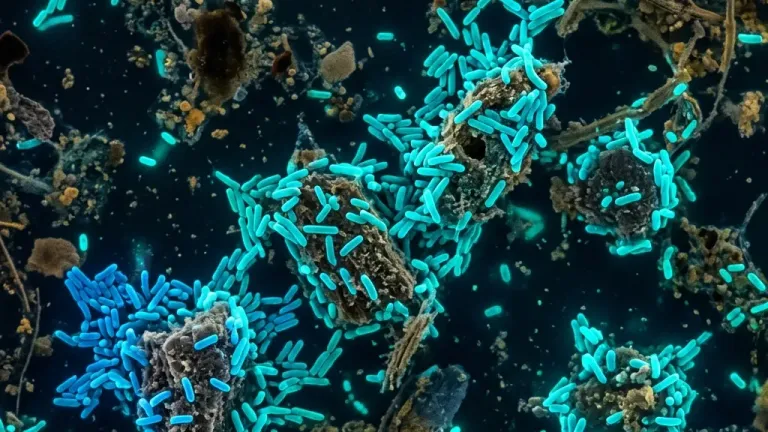
The Biology Your Septic System Depends On
Your septic tank is, at its core, a biological reactor. It is not designed to simply store waste until a truck comes to remove it — it is designed to biologically process that waste continuously, using bacteria as the active agent. The type, health, and population density of those bacteria determine how efficiently your system functions, how quickly sludge accumulates, and ultimately, how often you’ll need mechanical intervention.
Most homeowners are entirely unaware that there are two fundamentally different classes of bacteria that can inhabit a septic tank — and that the wrong type is costing them thousands of dollars in unnecessary maintenance.
Anaerobic Bacteria: The Default Population (and the Problem)
In a standard residential septic tank — sealed underground, without mechanical aeration — the biological population that naturally establishes itself is anaerobic bacteria: microorganisms that function without oxygen.
Anaerobic digestion is a real biological process. These bacteria do break down organic matter. However, they do so:
- Slowly and incompletely, leaving behind significant undigested residue that accumulates as sludge at the tank bottom and scum at the top.
- Inefficiently with fats, oils, and grease, which they cannot fully saponify (break down into water-soluble compounds). These substances form the dense, persistent scum layer that is particularly resistant to breakdown.
- With hydrogen sulfide as a byproduct, the compound responsible for the characteristic rotten-egg odor associated with septic systems. The more dominant the anaerobic population, the more pronounced the odor.
The fundamental limitation of anaerobic bacteria is not a failure of their biological function — it’s a mismatch between their metabolic efficiency and the organic load that a modern household generates. Residential water use has increased substantially over the past 40 years (dishwashers, multiple daily showers, high-capacity washing machines), while most residential tanks were designed under older usage assumptions.
Aerobic Bacteria: The High-Performance Alternative
Aerobic bacteria are microorganisms that require oxygen to metabolize organic compounds. In the presence of dissolved oxygen, they are dramatically more effective digesters:
- They break down fats, oils, and proteins 3 to 5 times faster than equivalent anaerobic populations under comparable organic loading conditions.
- They produce carbon dioxide and water as primary metabolic byproducts — not hydrogen sulfide — meaning that well-aerated systems produce significantly less odor. Read more on how aerobic bacteria eliminate odors.
- They are particularly effective at digesting paper products, cellulose, and biological solids that pass through household plumbing, maintaining clearer effluent that is less likely to clog drain field soil pores.
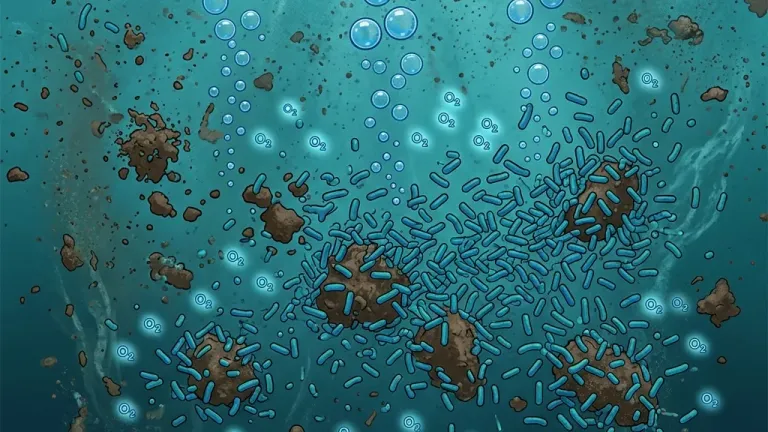
The challenge with aerobic bacteria in a residential context is their most basic requirement: oxygen. A sealed, underground septic tank is a naturally anaerobic environment. As organic matter decomposes and bacterial respiration continues, dissolved oxygen is rapidly depleted. Without a continuous oxygen supply, aerobic bacteria cannot establish or maintain a dominant population.
Why Traditional Septic Design Favors the Wrong Bacteria
The standard residential septic tank design has not changed substantially since the mid-20th century. It remains a sealed, passive container in which waste settles by gravity and partial biological breakdown occurs in the absence of any engineered oxygen supply. This design was adequate for lower household water use and simpler waste streams.
Modern households generate a far more complex organic load — including:
- Personal care products with antimicrobial compounds that suppress bacterial populations
- Cleaning products containing chlorine and quaternary ammonium compounds
- Higher volumes of cooking fats and grease from more frequent home cooking
- Pharmaceutical compounds that pass through human metabolism and into wastewater
Under these conditions, the naturally occurring anaerobic population is consistently overwhelmed. The result is the chronic sludge accumulation, drain field loading, and odor problems that have made reactive mechanical pumping the default — and expensive — maintenance strategy. Learn how anaerobic bacteria create the biomat if this process is left unchecked.
The Engineering Solution: Introducing Oxygen to Favor Aerobic Populations
Environmental engineers have understood the performance advantages of aerobic digestion for decades. Municipal wastewater treatment plants universally employ aerobic processes — they are simply more efficient and produce better-quality effluent.
For residential applications, two approaches exist:
Mechanical aeration systems — Electrically powered air diffusers or aerator pumps that continuously inject air into the septic tank, maintaining dissolved oxygen above the threshold required for aerobic bacterial survival. These systems cost $3,000–$10,000 to install and require ongoing electrical consumption and maintenance.
Solid oxygen-release compounds — Effervescent tablet formulations that, when introduced into the tank, slowly dissolve and release dissolved oxygen over periods of days to weeks. When paired with a concentrated aerobic bacterial inoculant, these compounds create a temporary but renewable oxygen-rich environment sufficient to sustain an aerobic bacterial colony without mechanical infrastructure.
The second approach — biological oxygen-release treatments — represents the more practical option for retrofit installation in existing residential systems. It does not require excavation, electrical connection, or structural modification of the tank. Review the best oxygen-release treatments available before deciding on a product.
The Biological Shift in Practice: What Changes Inside the Tank
When aerobic bacteria are successfully established and sustained in a septic tank, the measurable changes over a maintenance period typically include:
- Reduction in floating scum layer volume, as fats and oils are more completely metabolized
- Reduction in settled sludge depth, as previously undigested solids are progressively broken down
- Reduction in hydrogen sulfide concentration, as aerobic metabolic pathways displace the odor-producing anaerobic reactions
- Improved effluent clarity, as suspended solids in the liquid zone are digested before reaching the drain field outlet. This is the foundation of aerobic restoration of a failing leach field.
These changes are not instantaneous — establishing a stable aerobic bacterial colony typically requires a conditioning period of 30 to 90 days depending on initial tank conditions, organic loading, and water temperature (bacterial metabolic rates decline significantly below 50°F / 10°C).
Practical Implications: What This Means for Maintenance Costs
The biological composition of your septic tank has direct financial consequences. A tank dominated by an inefficient anaerobic population will:
- Accumulate sludge faster, requiring more frequent mechanical pumping
- Generate more solids in the effluent stream, increasing the rate of drain field biomat formation
- Produce more hydrogen sulfide, contributing to corrosion of concrete tank walls and metal components over time
A tank with a supported aerobic bacterial population will — over a sustained maintenance period — reduce sludge accumulation rates, extend drain field life, and reduce the overall frequency and cost of mechanical intervention.
Understanding this biological dynamic shifts septic maintenance from a purely reactive, mechanical framework to a more rational, evidence-based model that is already standard practice at the municipal wastewater level. The only remaining question for residential homeowners is whether the tools to implement it are accessible, affordable, and practical — and increasingly, they are. This should be the basis for incorporating aerobic stimulation into maintenance moving forward.