Consumer Guide

Why Is Laundry Water Backing Up Into the Shower? (Septic Warning Signs)

By Patricia HollowayContributing Editor
Fact-Checked
8-Minute Read
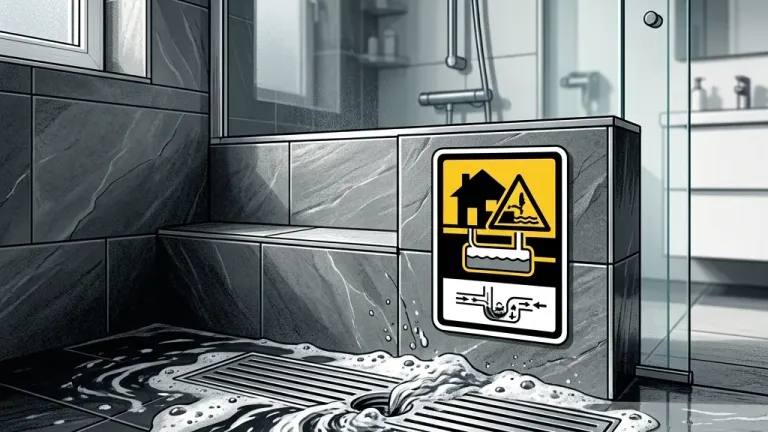
A shower drain with soapy water backing up and pooling around the drain, indicating a blocked drain line or septic system overload from laundry water.
Laundry water appearing in your shower is almost never a coincidence — it is a hydraulic and biological signal from your septic system that something has gone wrong downstream.

You run a load of laundry. Twenty minutes later, you walk into your bathroom and find the shower floor covered in sudsy, grey water.

It feels like a plumbing mystery. It is actually a diagnostic event.

When laundry water backs up into your shower, both fixtures share a common drain line, and something is blocking or slowing the flow between them and the septic tank. The backup travels through the path of least resistance — and in most homes, the shower drain is physically lower than the washing machine's standpipe, making it the first place overflow water surfaces.

The question is not just where the water came from. It is what the backup tells you about the health of your septic system — and whether you have days or months before a more expensive problem develops.

The 3 Causes of Laundry Water Backing Up Into the Shower

Cause 1: A Localized Drain Line Blockage

The most benign cause: a physical obstruction in the shared drain line between the laundry drain and the shower drain — before either one reaches the main house line or the septic tank.

Common culprits:

  • Lint accumulation at a pipe joint or elbow fitting (washing machines shed significant lint that bypasses most lint traps)
  • Soap scum buildup on pipe walls that narrows the drain diameter over months
  • A partial blockage from a foreign object (a sock or small garment that slipped past the machine drum)

How to diagnose this cause: If the backup only happens during or immediately after running the washing machine — and your other drains (kitchen, other bathrooms) are running normally — the blockage is likely in the localized shared line rather than in the main drain or the septic system.

What to do: A drain auger run through the washing machine standpipe or the shower drain can clear most pipe-level blockages. This is a DIY repair that takes 20–30 minutes and costs nothing if you own an auger, or $150–$250 if a plumber clears it.


Cause 2: Main Drain Line Restriction or Partial Blockage

If all of your home's drains are running slowly — not just the laundry-shower pair — the blockage is deeper in the system, in the main drain line that connects your house to the septic tank.

Why laundry is the trigger: Washing machines discharge water in large, sudden bursts (40–50 gallons in 30 minutes during a wash cycle) rather than in the slow trickle that sinks and showers produce. A main line that is already partially restricted will handle normal flow without visible symptoms — but the surge volume of a washing machine cycle overwhelms its reduced capacity and the water backs up through the lowest available opening.

Common causes of main line restriction:

  • Tree root intrusion into the pipe (roots are attracted to moisture and can infiltrate clay or older plastic pipes)
  • Grease accumulation from kitchen drain use
  • Partial collapse of an older clay or cast-iron pipe section

How to diagnose this cause: Run multiple fixtures simultaneously (fill a bathtub while running the washing machine). If multiple drains slow or back up together, the restriction is in the main line, not in the localized shared line.

What to do: A main line camera inspection by a licensed plumber ($200–$400) identifies the location and nature of the restriction. Root intrusion requires hydro-jetting or pipe replacement; grease accumulation typically responds to jetting.


Cause 3: Septic Tank Overload or Drain Field Failure

This is the most serious cause and the one with the highest long-term cost if ignored.

When the septic tank's sludge level is too high, or when the drain field can no longer absorb effluent at the rate the house is producing it, wastewater has nowhere to go. Hydraulic backpressure builds in the system, and water backs up into the house through the lowest drain openings.

The laundry connection specifically: Washing machines are among the heaviest contributors to septic system overload. Each load uses 40–55 gallons of water. Modern high-efficiency machines use less, but a household running multiple loads per day sends hundreds of gallons through the system — a load the septic tank and drain field must absorb in real time.

Beyond water volume, laundry contributes two specific septic stressors:

  1. Lint: Washing machines shed billions of microfibers per load. Lint bypasses most internal filters and enters the septic system as fine particulate matter that the tank's bacteria struggle to digest. It accumulates in the drain field's gravel bed, contributing to clogging.

  2. Laundry detergent: Phosphate-based and enzyme-inhibiting detergents kill or disrupt septic bacteria. Some fabric softeners coat bacterial cell walls, reducing their ability to process waste. If your household uses conventional (non-septic-safe) detergents in heavy quantities, the bacterial disruption compounds over time.

How to diagnose this cause: Watch for these simultaneous signals alongside the laundry backup:

  • Wet or spongy areas of lawn over the drain field
  • Sewage odor in the yard
  • All drains in the house are slow, not just laundry-related drains
  • The toilet drains slowly or gurgles when other fixtures run

If you are seeing two or more of these alongside the backup, the septic system — not just the drain pipe — is the source of the problem.


How to Fix Laundry-Driven Septic Backup

If the cause is localized (Cause 1): Mechanical Clearing

Use a drain auger to clear the shared pipe section. As preventive maintenance, install an external lint trap on the washing machine drain hose — these mesh filters catch the fine particulate that bypasses internal drum filters and prevent it from accumulating in drain pipes and the septic tank.

If the cause is main line restriction (Cause 2): Professional Inspection

A licensed plumber with a camera scope and hydro-jetting equipment is the appropriate response. Attempting to clear a root-intruded or partially collapsed pipe with a standard auger can cause further damage.

If the cause is septic system overload (Cause 3): Biological Treatment + Behavior Change

Immediate steps:

  1. Stop running laundry until the system stabilizes. Even one day of reduced hydraulic load gives the system breathing room.
  2. Space laundry loads across multiple days. Running one load per day rather than four loads in a single day reduces the peak hydraulic surge the system must handle.
  3. Switch to septic-safe, low-phosphate detergent. This removes one of the two primary biological stressors laundry places on the tank.

Biological treatment: If sludge accumulation is the cause of the hydraulic overload, a biological shock treatment — high-CFU oxygen-release tablets flushed down the toilet — begins reducing the sludge layer that is restricting the tank's capacity. For early-stage accumulation, this protocol shows measurable capacity improvement within 4–8 weeks.

If the drain field is showing symptoms of biological failure (wet patches, odor in the yard, slow absorption), the guide on how to unclog a leach field covers the non-invasive biological protocol that can restore field capacity before excavation becomes necessary.


Laundry Habits That Protect Your Septic System

Once you have resolved the immediate backup, these practices protect the system from recurrence:

Space loads across days. A household with a 1,000-gallon tank can comfortably handle 1–2 loads per day without hydraulic stress. Running 6–8 loads on a single day overwhelms the tank's capacity to separate and settle solids before sending effluent to the field.

Use septic-safe, high-efficiency (HE) detergent. Look for "septic safe" certification on the label. High-efficiency detergents use lower surfactant concentrations and are less disruptive to bacterial populations than standard-concentration formulas.

Install an external lint trap. Available for under $20, these mesh filters attach to the washing machine drain hose and catch lint before it enters the plumbing. Clean it every 2–3 loads.

Avoid fabric softener sheets and liquid softener. Both contain quaternary ammonium compounds — the same active ingredient in antibacterial products — that disrupt septic bacterial colonies. Replace with dryer balls or skip softener entirely.

Maintain a monthly biological treatment program. One oxygen-release biological tablet flushed monthly keeps the tank's aerobic bacterial population healthy and prevents sludge from accumulating to the levels that cause hydraulic backup.


Frequently Asked Questions

Is it safe to run laundry while the backup problem is happening?

No. Running laundry during an active backup event adds hydraulic load to an already overloaded system and forces more untreated wastewater up through your drains. Pause laundry use until the drain line is cleared or the septic system pressure has been relieved.

Can too much laundry cause septic system failure?

Yes. Excessive laundry — particularly multiple loads per day using conventional detergent — is one of the documented contributors to premature septic system failure. The combination of high water volume, lint particulate, and bacteria-disrupting detergent chemistry degrades tank biology and drain field absorption capacity over time.

Why does the shower back up and not the toilet?

Shower drains are typically positioned lower in the house's drain topology than toilet flanges. When backpressure builds in the main drain line, water surfaces at the lowest available point — which in most home layouts is the shower drain. The toilet's taller outlet height means it backs up later in a failure sequence than the shower.

My washing machine has a "septic safe" setting — does that help?

High-efficiency wash cycles use less water per load, which reduces the hydraulic stress on the system. However, "septic safe" settings do not change the detergent chemistry — only switching to a genuinely septic-safe detergent addresses the biological impact. The lower water volume does meaningfully reduce peak surge stress on the drain field.

How long does biological treatment take to fix a septic backup?

For hydraulic overload caused by sludge accumulation, early-stage biological treatment (oxygen-release tablets) shows measurable improvement in 4–8 weeks. For active drain field failure with visible symptoms (wet ground, surfacing effluent), biological treatment can take 6–8 weeks with strict reduced water usage — and may require professional intervention if the field has progressed to complete hydraulic failure.


Editor's Recommendation — Sponsored

After Our Independent Analysis

Editor's Top Pick 2026Septifix — Best Septic Treatment
✓ 60-Day Money-Back Guarantee✓ Free Shipping on 12+ Month Packages✓ No Harsh Chemicals

Laundry backup into the shower is a symptom that demands immediate investigation — not just a shop-vac cleanup. When the cause is septic system overload rather than a localized pipe blockage, the fix is biological: reducing sludge accumulation to restore the tank's capacity to handle normal household loads. Oxygen-release biological treatments address this at the source, providing measurable hydraulic relief within 4–8 weeks of consistent application.

View the Biological Treatment That Restores Septic Capacity →

Transparency: By clicking, you will be redirected to the manufacturer's official site. This is an independent editorial review that contains affiliate links.


Free Homeowner Tools