
How to Clean a Leach Field: Mechanical vs. Biological
Leach Field Cleaning: What It Actually Means
When homeowners search for “how to clean a leach field,” they are usually dealing with one of two very different problems — and the solution depends entirely on which one you have.
Problem A: Clogged pipes. The lateral pipes inside the drain field are physically blocked with lint, grease, or sediment from the septic tank. The soil itself may still be capable of absorbing water.
Problem B: Saturated soil (biomat). The pipes are clear, but the surrounding soil is sealed with a biological crust called a biomat — a dense layer of anaerobic bacteria and organic solids that prevents liquid from percolating into the ground.
The cleaning approach is completely different for each. Getting this wrong is expensive.
Hydro-jetting a leach field that has a biomat problem will clear the pipes temporarily but will not address the soil. Most homeowners who jet their drain field without treating the biomat see symptoms return within 30 to 90 days.
— Independent Wastewater Specialists Advisory
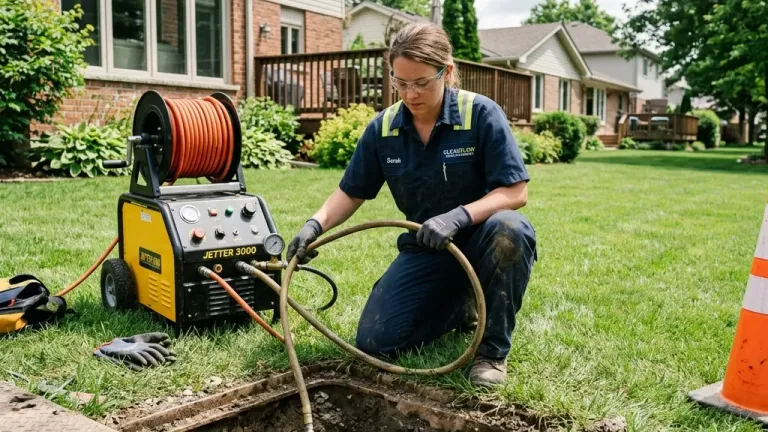
Method 1: Hydro-Jetting the Lateral Lines (Mechanical)
Hydro-jetting uses high-pressure water (2,000–4,000 PSI) to blast debris from the inside of the perforated pipes. A flexible hose is fed into the clean-out access ports, and the rotating nozzle flushes accumulated solids back toward the septic tank or out the end of the line.
When Jetting Works
Jetting is strictly a physical pipe-cleaning method. It is highly effective when:
- The drain field is relatively new (under 10 years old) and the soil is healthy.
- Symptoms appeared suddenly after a heavy lint load from the washing machine, or flushing non-biodegradable wipes.
- You have confirmed through a camera inspection that the pipes themselves are blocked by roots or physical sludge.
- The soil still shows some absorption capacity (standing water clears within a few hours of reducing water usage).
What to Expect When Hiring a Pro
- Cost: A professional jetting service for a standard 3-bedroom home system typically costs $300 to $800.
- Process: The technician will need to dig up the D-box (Distribution Box) or access the cleanouts at the end of your lateral lines. The jetting process takes 1-3 hours.
- Limitation: Jetting will not restore a drain field if the soil itself has been sealed by years of biomat accumulation.
Method 2: Soil Aeration / Fracturing (Mechanical)
Aeration (often called “Terralift” or air injection) is a more aggressive mechanical intervention aimed at the soil rather than the pipes. A pneumatic probe is driven 4 to 6 feet into the soil around the drain field trenches, and compressed air is forced into the ground at high pressure.
This fractures compacted soil, physically breaks up the biomat structure, and creates new fissures and channels for water to flow away from the trenches.
When Aeration Works
- You have severe soil compaction from heavy machinery driving over the field.
- The biomat is extremely thick and biological treatments have failed.
- You want an immediate, overnight increase in percolation rate to stop a backup.
What to Expect When Hiring a Pro
- Cost: Aeration services range from $500 to $1,500 depending on the size of the drain field and the number of probe points.
- Process: The technician drives a machine across your yard, injecting air every few feet. It is minimally invasive compared to excavation, but will leave small probe holes in the lawn.
- Limitation: It is a temporary mechanical fracture. If you do not change the bacterial environment in the tank, the anaerobic biomat will rapidly seal the new fissures.
Method 3: Biological Biomat Removal (Chemical/Biological)
For the vast majority of clogged leach fields — where the soil has been sealed by anaerobic bacterial activity rather than physical pipe blockages — the most cost-effective and lasting solution is biological treatment, rather than mechanical cleaning.
Aerobic bacteria and oxygen-releasing compounds can digest the biomat layer over 60 to 90 days, restoring the soil’s natural absorption capacity from the inside out, without any digging or heavy machinery.
This is the approach recommended before attempting any mechanical intervention. For a complete breakdown of how to treat the biomat chemically and biologically, you must read our dedicated guide:
The 90-Day Biological Leach Field Treatment Protocol
Learn how to use oxygen-release treatments to digest the biomat without hiring a hydro-jetting service.
Read the Full Guide“Biological biomat treatment should always be the first intervention for a slow drain field, not the last. The cost difference between a $60 biological protocol and a $15,000 excavation makes early biological treatment one of the highest-ROI decisions a homeowner can make.”
What Leach Field Cleaning Cannot Fix
No cleaning method — mechanical or biological — can restore a drain field that has experienced:
- Complete soil saturation with a permanently elevated water table (e.g., during extreme flooding).
- Physical pipe collapse due to root intrusion, ground movement, or heavy vehicles driving over the laterals.
- Undersized system that was never adequate for the household water load.
- Chemical damage from decades of bleach, antibacterial products, or chemical drain cleaners that permanently altered the soil pH.
In these cases, cleaning is useless, and you need to evaluate your replacement options with a licensed septic contractor. If you are experiencing an active sewage backup right now, stop reading and follow our emergency guide on how to fix a saturated leach field.
Conclusion
Cleaning a leach field is not a single action — it is a diagnostic process. Identify whether you have a physical pipe clog or a soil biomat problem first.
Then apply the correct method: jetting for physical debris in the pipes, aeration for compacted soil, and biological treatment for the biomat. In most cases, biological treatment is the right starting point and the most cost-effective intervention available.