
How to Fix a Saturated Leach Field (Without Excavation)
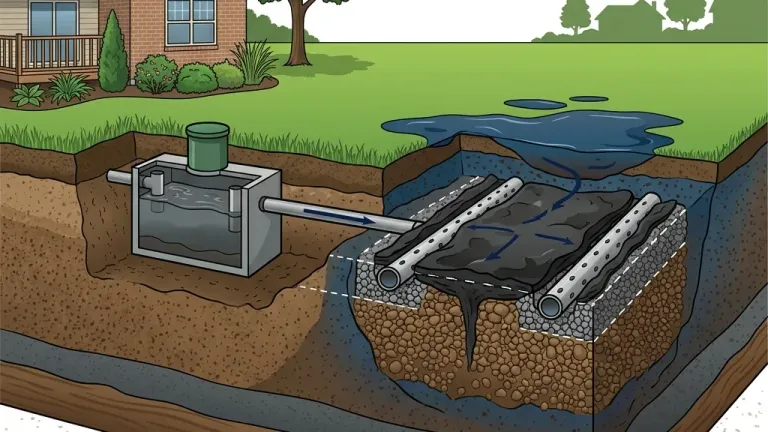
When a homeowner steps into their backyard and finds the grass above the leach field spongy, flooded, or smelling like sewage, the immediate reaction is panic. A saturated leach field is one of the most alarming symptoms of septic system stress.
Before calling an excavator for a costly $15,000 replacement, it is crucial to understand that saturation is a symptom, not a diagnosis.
In this guide, we break down exactly how to fix a saturated leach field by identifying the root cause and applying targeted, non-invasive remediation strategies.
Diagnose Your Leach Field
Answer 4 questions to find out if your saturation is caused by hydraulic overload or a biological biomat clog.
Read the Full GuideSigns Your Drain Field is Saturated
Before you start treating the field, confirm that the field itself is the issue, rather than just a full septic tank or a clogged pipe.
Look for these distinct signals:
- Spongy or wet grass: Even when it hasn’t rained, the ground over the leach field lines is wet.
- Overly green grass: The grass above the field is significantly greener and taller than the rest of the yard (due to the nutrient-rich effluent trapped near the surface).
- Foul odors: A distinct sewage smell hanging in the yard, particularly in the morning or evening.
- Backup in the house: If the field can’t accept water, it backs up into the house. If you see this, you should also check the 8 signs your septic tank is full to rule out a localized tank issue.
Hydraulic Overload vs. Biological Clogging (The Biomat)
There are two primary reasons a leach field becomes saturated. You cannot fix the field until you know which one you are dealing with.
Hydraulic Overload
This occurs when more water is entering the soil than it can physically absorb, regardless of how healthy the septic system is. Common causes include:
- Excessive Household Water Usage: Running multiple loads of laundry, long showers, and running the dishwasher all on the same day.
- Surface Water Runoff: Downspouts or landscaping directing rainwater directly over the drain field area.
- Seasonal High Water Table: Heavy spring rains raising the natural groundwater level, leaving nowhere for the effluent to go.
Biological Overload (The Biomat)
If the weather has been dry and household water usage is normal, the saturation is almost certainly biological.
When harsh chemicals kill the beneficial bacteria in the septic tank, undigested solid waste flows out into the leach field. Anaerobic bacteria feed on these solids in the soil, creating a thick, black, slimy layer known as the biomat. This biomat essentially turns the soil into a waterproof tarp, sealing the pores and trapping the water above it.
Step 1: Immediate Relief Actions
If you are dealing with a saturated field right now, you must immediately reduce the water load to prevent sewage from backing up into the house.
- Implement extreme water conservation: Limit showers to 3 minutes, flush only for solid waste, and take laundry to a laundromat for the next week.
- Redirect surface water: Ensure gutters and downspouts are discharging at least 20 feet away from the drain field.
- Inspect the septic tank: Have the tank pumped only if the water level in the tank is above the outlet pipe. Pumping the tank provides temporary relief (buying you 3-5 days of usage), but it does not unclog the field. The biomat remains in the soil even when the tank is empty.
Step 2: Breaking Down the Biomat
If the saturation is caused by a biomat clog, mechanical pumping will not solve the underlying issue. The soil pores must be physically unsealed.
The fastest biological intervention for a saturated field is a leach field shock treatment — a concentrated aerobic bacteria dose delivered directly into the lateral lines. These aggressive microbes actively digest the organic biomat layer, slowly reopening the soil pores over several weeks.
How to Apply a Bioremediation Shock:
- Choose a high-concentration bacterial treatment designed specifically for sludge and biomat reduction (such as oxygen-release effervescent tablets).
- Apply directly to the D-Box or outlet baffle if accessible, or flush down the main floor toilet.
- Maintain minimal water usage for 48 hours after application to prevent washing the bacteria out before they can establish colonies in the field.
How to Treat a Failing Leach Field Without Digging
The complete biological restoration protocol for saturated and clogged drain fields — from shock treatment to 90-day maintenance.
Read the Full GuideWhen Is Excavation Actually Necessary?
While biological treatments can save the majority of clogged fields, there are situations where heavy machinery is the only option:
- Root Intrusion: Large tree roots have crushed or completely invaded the perforated PVC pipes.
- Vehicle Damage: Heavy equipment or vehicles parked over the field have compacted the soil and crushed the pipes.
- System Age: The system is over 40 years old, and the soil’s natural cation exchange capacity is permanently exhausted.
If you suspect your system is merely suffering from organic biomat clogging, a high-quality biological treatment is the most cost-effective first step toward full restoration before considering a $15,000 replacement.
Leach Field Restoration: Every Option Compared (2026)
Biological treatment, aeration, hydro-jetting, and replacement — compare every option with real cost breakdowns before calling a contractor.
Read the Full GuideLeach Field Restoration vs. Replacement: Which Do You Actually Need?
Use this decision framework to determine whether your specific failure is restorable or requires excavation.
Read the Full GuideEditorial Note: The homeowner experience above is a composite dramatization for illustrative purposes only. This is an advertorial and contains affiliate links. Individual results may vary.