
Rotten Egg Smell in Yard? Hydrogen Sulfide & Septic Systems

What Hydrogen Sulfide Is — and Where It Comes From
The characteristic odor of a malfunctioning septic system — described universally as rotten eggs — is hydrogen sulfide gas (H₂S). It is not simply unpleasant: it is a toxic compound with established occupational exposure limits set by OSHA, a documented mechanism of structural damage to concrete and metal components, and concentration-dependent health effects that extend well beyond the nuisance range.
Hydrogen sulfide in residential septic systems is produced primarily by a specialized group of anaerobic microorganisms called sulfate-reducing bacteria (SRB). These bacteria obtain energy by using sulfate ions (naturally present in wastewater from food, detergents, and groundwater) as an electron acceptor in their metabolism, producing hydrogen sulfide gas as a byproduct.
The critical condition enabling SRB activity is the absence of oxygen. In a well-aerated environment, other bacterial populations outcompete SRBs for available energy sources and suppress their activity. In the oxygen-depleted environment of a sealed, conventional septic tank — particularly one with an overloaded anaerobic population and poor biological breakdown — SRBs thrive.
Concentration, Smell, and Health Effects
Hydrogen sulfide is detectable by the human nose at concentrations as low as 0.5 parts per billion (ppb) — making it one of the most odor-active compounds in common environmental exposure. This extreme odor sensitivity is relevant because it means that levels detectable by smell are far below levels of acute toxicity. The problem is that the nose adapts rapidly to H₂S exposure, causing olfactory fatigue:
↔ Scroll horizontally to see full comparison table
| H₂S Concentration | Effect |
|---|---|
| 0.5–5 ppb | Detectable odor (rotten egg) |
| 10 ppm | Eye and respiratory irritation threshold |
| 50 ppm | OSHA 10-minute ceiling limit |
| 100 ppm | Rapid olfactory fatigue — smell disappears |
| 200–300 ppm | Pulmonary edema risk, loss of consciousness |
| 700–1,000 ppm | Immediately dangerous to life |
For residential septic systems in normal operation, ambient outdoor concentrations near a venting system are orders of magnitude below health-risk thresholds. The concern shifts when H₂S accumulates in enclosed spaces — basements, crawl spaces, pump chambers, or confined inspection areas.
The Corrosion Mechanism: Why H₂S Destroys Infrastructure
Beyond health considerations, hydrogen sulfide poses a significant structural threat to concrete septic tanks through a process called biogenic sulfide corrosion (BSC):
- H₂S gas produced by SRBs in the liquid zone rises into the gas-filled headspace of the tank.
- The gas contacts moisture on the concrete walls above the waterline.
- Aerobic sulfur-oxidizing bacteria (present on the moist concrete surface) convert the H₂S to sulfuric acid (H₂SO₄).
- Sulfuric acid attacks the calcium silicate compounds in concrete, converting them to gypsum — a soft, water-soluble compound.
- The concrete surface progressively softens, loses structural integrity, and deteriorates.
This process is the leading cause of premature failure in concrete septic tanks. Systems in regions with high-sulfate groundwater (common in agricultural areas where sulfate-bearing fertilizers infiltrate the water table) experience accelerated BSC. Concrete tanks typically carry a design life of 20–40 years; tanks operating in high-H₂S environments often fail structurally in 15–20 years.
Diagnosing an H₂S Problem in Your System
Not all septic odors indicate the same severity of H₂S production. Distinguishing between normal system odors and elevated H₂S production requires evaluating several indicators:
Odor frequency and location: Brief, transient odors near vents immediately after heavy toilet use are normal. Persistent odors at vent openings, near the tank access area, or — more seriously — detectable at the drain field surface indicate elevated H₂S production. Read about practical ways to eliminate hydrogen sulfide odor if the smell is persistent.
Concrete condition: If your tank has been inspected and the inspector noted concrete spalling, soft patches on interior walls, or surface corrosion, biogenic sulfide corrosion is a likely contributing cause.
Inspection findings: A licensed inspector using a gas detection instrument can measure H₂S concentrations in the tank headspace. Readings above 50–100 ppm in the tank headspace indicate significant SRB activity.
The Biological Solution: Suppressing SRB Through Oxygenation
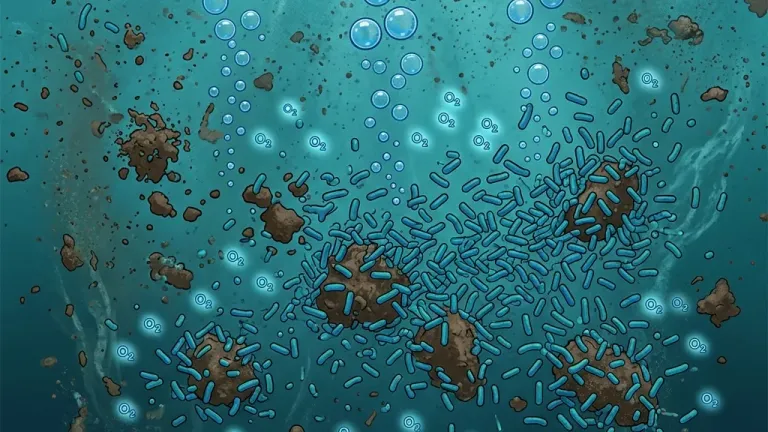
The direct countermeasure for H₂S production is altering the biological balance of the septic tank to disfavor sulfate-reducing bacteria — specifically, by introducing dissolved oxygen into the tank environment.
SRBs are strict anaerobes: they cannot function in the presence of oxygen. When dissolved oxygen concentrations rise in the tank liquid, two things happen simultaneously:
- SRBs are directly suppressed — they either die or become metabolically dormant.
- Aerobic and facultative bacteria — which outcompete SRBs in oxidized conditions and do not produce H₂S — establish dominance. You can learn more about how aerobic bacteria prevent sulfide generation.
In practice, even modest increases in dissolved oxygen concentration (above 0.5–1 mg/L) are sufficient to substantially reduce H₂S production. The challenge for residential systems without mechanical aerators is achieving this oxygenation reliably.
Solid-state oxygen-releasing compounds — the same technology used in aerobic biological treatment tablets — work directly against H₂S production by introducing dissolved oxygen, simultaneously suppressing SRBs and supporting H₂S-oxidizing bacteria that biologically consume any H₂S produced before it can off-gas. Look for treatments that stop hydrogen sulfide production before the problem worsens.
For homeowners with persistent septic odors, the presence of significant SRB activity in the tank is a diagnosable and addressable biological problem — not simply an unavoidable consequence of system ownership. This is a core part of preventing hydrogen sulfide buildup through maintenance.