
8 Warning Signs Your Septic Tank is Full (And When to Pump)

Why “Full” Is More Complex Than It Sounds
When homeowners ask whether their septic tank is full, they usually picture a tank overflowing with sewage. The reality is more nuanced — and more important to understand.
A septic tank is “full” in three distinct senses, and each requires a different response:
- Operationally full — Sludge and scum layers have accumulated to the point where the tank is no longer efficiently separating solids from liquids. The tank needs pumping, but has not yet failed.
- Hydraulically overloaded — The system is receiving more water than it can process, causing liquid effluent to push through without proper biological treatment.
- Biologically depleted — The bacterial populations needed for breakdown are suppressed, causing solids to accumulate faster than normal. This is often confused with structural failure but responds to biological treatment.
Each of these conditions produces specific, recognizable warning signs.
Sign #1: Slow Drains Across Multiple Fixtures Simultaneously
The most reliable early indicator of a septic problem — not a plumbing problem — is multiple fixtures draining slowly at the same time. A single slow drain (one sink, one shower) almost always indicates a localized blockage in that specific line.
When the kitchen sink, bathroom sink, shower, and toilet all drain slowly during the same period, the restriction is downstream from all of them. In a home on private septic, that downstream location is the septic tank or drain field.
Immediate action: Reduce household water use — no laundry, limit showers, minimize toilet flushes. This relieves hydraulic pressure on the system while you arrange an inspection. Do not use chemical drain cleaners; they can kill beneficial bacteria in the tank and worsen the underlying problem.
Sign #2: Gurgling or Bubbling Sounds After Flushing
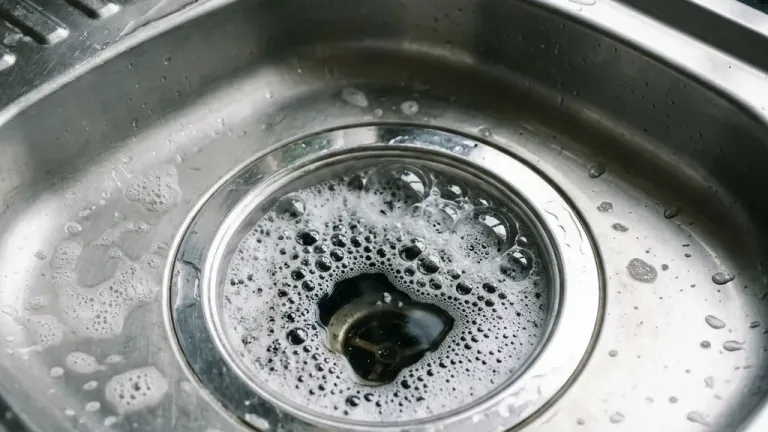
Gurgling or bubbling sounds from toilets after flushing, or from floor drains after running water elsewhere in the house, indicate disrupted air pressure in the drainage system.
In a healthy system, air moves freely through the vent stack. When the tank is full or the drain field is saturated, the system pushes back against drainage flow — disrupting air circulation and producing the characteristic gurgling sound.
This sign is frequently misattributed to a clogged vent pipe, which can look identical. For a complete comparison of blockages vs capacity issues, read our breakdown of septic tank full vs clogged symptoms. The differentiating factor: if the gurgling appears across multiple fixtures simultaneously and is accompanied by any other sign on this list, the septic system is the more likely cause.
Sign #3: Foul Odors Inside the Home
Hydrogen sulfide — the “rotten egg” gas produced by anaerobic bacterial breakdown — is a normal byproduct of septic system operation. Under normal conditions, the sealed system contains it entirely.
When odors penetrate inside the home through drains, toilets, or floor vents, the system’s internal pressure balance has been disrupted. This typically means the liquid level in the tank has risen to the point where gases are being forced back through the plumbing rather than escaping through the vent stack.
The appearance of indoor odors is an urgent sign. It suggests the system is at or near hydraulic capacity. Read our dedicated article on the science of hydrogen sulfide in septic systems for a complete breakdown.
Sign #4: Sewage Odors in the Yard
Outdoor sewage odors localized above the drain field or septic tank area have a different cause than indoor odors — and a more serious one.
When effluent is surfacing or near-surfacing in the yard due to drain field saturation, the released gas becomes detectable above ground. This typically means the drain field soil has reached its absorption limit and liquid is pooling near the surface.
In most U.S. counties, surfacing sewage is a reportable condition with potential regulatory and health implications. If you detect outdoor sewage odors after rainfall, treat it as a priority issue.
“Odor emergence at or near the soil surface above a drain field is one of the most reliable indicators of biomat formation or hydraulic failure. It should not be attributed to seasonal causes or dismissed without inspection — the condition is unlikely to self-resolve without intervention.”
Sign #5: Unusually Lush or Green Grass Over the Drain Field
A strip or patch of exceptionally green, fast-growing grass directly above where your drain field pipes run is not a sign of good soil health. It indicates that nitrogen-rich, partially treated effluent is reaching the root zone — meaning the drain field is not properly containing and filtering the effluent below the surface.
This is often the earliest visible outdoor indicator of drain field saturation, appearing weeks or months before wet ground or odors develop. Mark the location and monitor it between rain events. If the green patch persists during dry weather, schedule an inspection.
Sign #6: Standing Water or Wet Patches Over the Tank or Drain Field
Visible standing water or persistently wet ground directly above the septic tank or drain field is a serious warning sign. At this stage, liquid effluent has saturated the upper soil layers and is surfacing.
Two mechanisms produce this symptom:
- Hydraulic overload — the system is receiving more volume than it can process
- Biomat formation — a dense layer of anaerobic bacteria and organic debris has blocked soil pores in the drain field, preventing effluent from percolating downward
Biomat is the more common and more concerning cause. It develops progressively and will not resolve without treatment. For a detailed explanation, see our article on drain field failure warning signs and causes.
Sign #7: Sewage Backup Into the Home
A sewage backup — where waste or dark water reverses flow and appears in the lowest drains in the house (basement floor drains, ground-level showers, downstairs toilets) — is an emergency condition.
This occurs when the tank is full to overflowing and the drain field cannot accept additional volume. Pressure builds in the system until the path of least resistance becomes the plumbing lines themselves, reversing flow into the home.
Immediate steps:
- Stop all water use in the house entirely
- Do not use chemical products — they will not resolve a system-level backup
- Contact a licensed septic service provider as a priority call
- Do not allow children or pets near any affected areas
Sign #8: Inspection Access Lids That Are Difficult to Locate
This is less a symptom and more a risk factor: if you don’t know where your tank lid is located — or if it’s buried under several inches of soil — your system hasn’t been inspected recently enough to catch early warning signs before they escalate.
The EPA recommends septic system inspection every 1–3 years depending on system type and household load. A buried access lid suggests years have passed without professional assessment.
What to Do When You Notice These Signs
Step 1: Reduce Hydraulic Load Immediately
Every gallon that enters a saturated system adds pressure. Reduce household water use as much as possible until the system is assessed.
Step 2: Identify Whether the Problem Is Operational or Biological
If the tank hasn’t been pumped in over 2 years, call for pumping. If it was recently pumped and symptoms are returning, the problem may be biological — a depleted bacterial population that’s not effectively breaking down incoming organic material. Reviewing what biological septic treatments actually do can help you determine the right response.
Step 3: Schedule a Professional Inspection
An inspection includes sludge depth measurement, baffle inspection, and drain field assessment. Understanding how to read that report — and what the numbers mean for your system — is covered in our guide to interpreting your septic inspection results.
Step 4: Address the Root Cause, Not Just the Symptom
Pumping relieves the immediate pressure, but it doesn’t address why sludge accumulated faster than expected. Identifying contributing factors — household water use, garbage disposal, medication exposure, biological health of the tank — and addressing them is how you prevent recurrence.
Key Takeaways
- A septic tank can be “full” in three distinct ways: operationally, hydraulically, or biologically — each requiring a different response.
- Multiple slow drains simultaneously is the earliest and most reliable indoor indicator.
- Outdoor signs (green grass, wet ground, odors) indicate the problem has reached the drain field.
- Sewage backup is an emergency requiring immediate action and cessation of water use.
- Pumping addresses the symptom; understanding and correcting the root cause prevents recurrence.
Free Homeowner Tools
- Septic System Health Assessment — Our 2-minute diagnostic tool helps identify whether your symptoms indicate tank, biological, or drain field issues.