
How to Dissolve Septic Tank Solids Safely (Without Pumping)
If you are researching how to dissolve solids in your septic tank, you are asking the right question at the right time. Solid waste accumulation is the root cause of the vast majority of septic system failures — but it is also one of the most addressable problems in residential wastewater management, provided it is caught before the critical threshold.
This guide explains exactly what septic tank solid waste is, why it accumulates faster in modern households, and the step-by-step biological approach to dissolving it naturally — without harsh chemicals that make the problem worse and without an emergency pump-out bill.
What Are the “Solids” in a Septic Tank?
Your septic tank receives everything that goes down your home’s drains and toilets. Inside the tank, that mixture separates into three distinct layers based on density:
The Scum Layer (Top) Fats, oils, and grease float to the surface and form a semi-solid crust. This scum layer is composed primarily of cooking grease, soap residue, and personal care products that do not readily break down in water.
The Effluent Layer (Middle) The liquid zone between the scum and sludge layers. Partially clarified wastewater occupies this zone and flows out through the outlet baffle to the drain field for further treatment in the soil.
The Sludge Layer (Bottom) This is the layer most homeowners ask about when they want to “dissolve solids.” It is the dense, semi-solid accumulation of:
- Inorganic materials — sand, grit, mineral compounds that cannot be digested regardless of treatment
- Partially digested organic matter — proteins, cellulose, and fats that bacteria have begun breaking down but have not yet fully processed
- Dead bacterial mass — the byproduct of the anaerobic bacterial activity that does most of the work in an untreated tank
- Fecal solids — the heavy fraction of human waste that settles rather than dissolving into the liquid zone
When people ask how to dissolve solids in a septic tank, they are specifically asking about the organic fraction of the sludge layer — the material that living bacteria can break down, given the right conditions.
The inorganic component (sand, grit) can only be removed mechanically during a pump-out. No biological or chemical treatment dissolves inorganic material. Understanding this distinction is essential for setting realistic expectations.
Toilet Paper vs. Organic Waste: What Dissolves Easiest?
Not all solids are created equal. When attempting to dissolve waste, it helps to understand the breakdown timeline of different materials:
- Human Waste (Fecal Matter): Easily digestible. High-quality bacteria can break this down very quickly.
- Standard Toilet Paper (Cellulose): Requires cellulase enzymes to break down. Septic-safe toilet paper dissolves rapidly, while ultra-plush paper can take weeks to decompose fully.
- Fats, Oils, and Grease (FOG): Very difficult to dissolve. These require specialized lipase enzymes and significant time. They often harden into the top scum layer.
- “Flushable” Wipes: A major hazard. Despite the name, most wipes contain synthetic fibers that will not dissolve biologically. They must be pumped out mechanically.
Home Remedies vs. Commercial Dissolvers: What Actually Works?
Homeowners often search for cheap DIY methods to dissolve solids. The science on home remedies is clear:
- Baking Soda & Vinegar: This combination creates an impressive fizz in a drain pipe, but does absolutely nothing to digest solid waste. It is a chemical reaction, not a biological digestion process.
- Yeast: Baker’s yeast produces gas, not the specific enzymes (lipase, protease, cellulase) required to break down human waste and toilet paper. It provides negligible benefits for solid dissolution.
- Commercial Oxygen-Release Bacteria: This is the only scientifically validated non-mechanical method. High-CFU aerobic bacteria combined with an oxygen delivery system can actively digest the organic solids in the sludge layer.
Why Solids Accumulate Faster Than They Should
In a biologically healthy septic tank, naturally occurring bacteria continuously digest the organic fraction of the sludge layer, keeping it within manageable bounds. The system is designed to self-regulate.
The problem is that modern household habits systematically undermine this self-regulation:
Antibacterial Products Kill the Bacteria That Digest Solids
Antibacterial soaps, bleach, chemical drain cleaners, and disinfectant sprays enter the tank through normal drain usage. Once there, the active agents — triclosan, chlorine, quaternary ammonium compounds — do not distinguish between pathogenic bacteria on surfaces and the beneficial bacteria inside your tank. Both populations are reduced.
When bacterial populations drop, digestion slows. Organic solids accumulate faster than they decompose. The sludge layer grows.
Anaerobic Bacteria Are Inherently Slow Digesters
Even in an untreated but chemically undisturbed tank, the naturally dominant bacteria are anaerobic — they function without oxygen. Anaerobic bacteria digest organic waste at a fraction of the rate of aerobic bacteria (which require oxygen). They produce hydrogen sulfide gas as a byproduct (the rotten-egg odor) and leave behind undigested residue that adds to the sludge mass.
A tank dominated by anaerobic bacteria will always accumulate sludge faster than one where aerobic bacteria have been introduced. This is the biological basis for why oxygen-delivery treatments are so effective at dissolving solids. Read the full comparison of aerobic vs. anaerobic bacteria to understand the mechanism in depth.
High Household Load Overwhelms Digestion Capacity
Tank sizing is based on standard household occupancy. Households with more people, a garbage disposal, heavy cooking, or frequent guests push organic loading beyond the digestion capacity of the bacterial population. Solids enter faster than they can be processed.
What Happens When Solids Are Not Dissolved
Solid accumulation does not stay contained to the tank. Once the sludge layer reaches approximately 30% of total tank volume — a threshold that most systems hit within 3 to 5 years without biological treatment — solid waste begins escaping through the outlet baffle with each flush.
These undigested solids enter the drain field lateral lines. In the soil, they mix with anaerobic bacteria to form biomat: a dense, tar-like organic crust that progressively seals the soil pores of the leach field.
When the soil can no longer absorb liquid effluent, hydraulic failure follows. Effluent backs up into the house. Sewage surfaces in the yard. The cost of repair — drain field replacement — typically runs between $10,000 and $25,000.
This failure sequence is predictable, measurable, and preventable. Dissolving solids in the tank before they reach the overflow threshold is the intervention that breaks it.
The 30% threshold — the point at which sludge begins overflowing into the drain field — is typically reached within 3 to 5 years in households that use no biological treatment and regularly use antibacterial products. In households with consistent monthly biological treatment, the same threshold takes 7 to 10+ years to reach, dramatically reducing both pump-out frequency and drain field risk.
— Residential Wastewater Systems Report, 2026
The 3 Methods to Dissolve Solids in a Septic Tank
Method 1: Biological Treatment (Recommended)
What it is: Introducing concentrated bacteria and enzymes — particularly aerobic bacteria and oxygen — into the tank to accelerate the biological breakdown of organic solids.
How it works: Aerobic bacteria digest organic matter 3 to 5 times faster than the anaerobic bacteria naturally present in the tank. By introducing oxygen (which aerobic bacteria require to survive) alongside high concentrations of aerobic bacterial strains, you create an environment in which the organic sludge fraction is broken down significantly faster than it accumulates.
Why it is the recommended method:
- Works on the actual biological root cause of accumulation
- Safe for all pipe materials, tank materials, and drain field soil
- Does not disrupt the bacterial ecosystem — it enhances it
- No equipment or professional service required
- Measurable improvement within 4–8 weeks for early-to-moderate accumulation
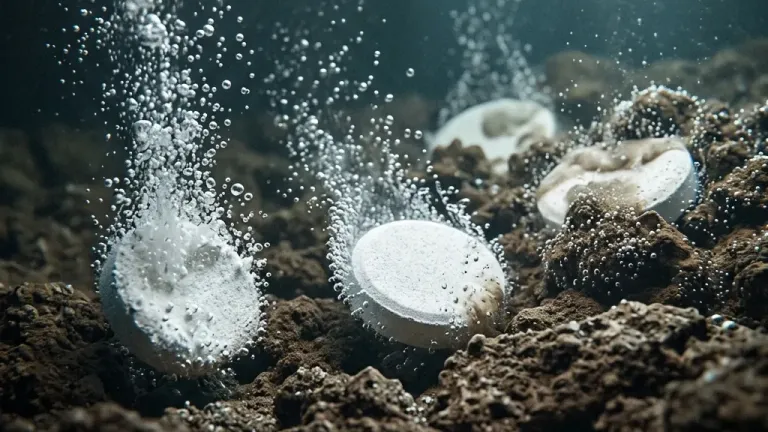
Best format for solid dissolution: Effervescent tablets that sink to the tank bottom and release oxygen at the sludge interface — delivering active ingredients where the sludge is actually located, not floating at the water surface. If you need a ranked comparison by delivery format and CFU concentration, see our review of the best septic sludge dissolver available in 2026.
Method 2: Mechanical Pump-Out
What it is: Physical removal of accumulated sludge by a licensed pumper truck.
How it works: A hose is inserted into the tank access port, and the contents — liquid, sludge, and scum — are vacuumed out and transported to a treatment facility.
When it is appropriate:
- Sludge layer has exceeded 30–40% of tank volume
- Active sewage backup exists in the house
- System is in or approaching hydraulic failure
- Heavy inorganic accumulation that biological treatment cannot address
Important limitation: Pump-outs remove both inorganic and organic sludge — and also remove the beneficial bacterial population that keeps the system functioning. After a pump-out, the tank must rebuild its bacterial ecosystem from scratch. Starting a biological treatment protocol immediately after pumping is critical to preventing rapid re-accumulation. Learn about the difference between bio-remediation and mechanical pumping to understand when each is appropriate.
Method 3: Chemical Treatments (Not Recommended)
What they claim: Chemical solvents and acid-based additives “break down” solids through chemical reaction rather than biological digestion.
The reality: Strong chemical compounds dissolve some organic surface material temporarily but destroy the bacterial ecosystem that the tank depends on to function. After a chemical treatment, bacterial populations crash. Digestion slows dramatically. Sludge accumulation accelerates in the following weeks and months.
Some chemical treatments also damage PVC pipe fittings, concrete tank walls, and the biological balance of drain field soil. Chemical treatments are not a safe or effective method for dissolving septic tank solids.
Step-by-Step: How to Dissolve Solids in Your Septic Tank Naturally
This is the practical protocol for homeowners dealing with early-to-moderate solid accumulation using biological treatment:
Step 1 — Assess your sludge risk level first
Before starting a treatment protocol, get a clear picture of where your system currently stands. A heavy sludge load may require a pump-out before biological treatment can reach the organic fraction effectively.
Use the Septic Tank Sludge Level Finder — a 4-question assessment that evaluates your pump-out history, current drain symptoms, household habits, and occupancy to determine whether your situation calls for prevention, corrective treatment, or professional intervention.
Step 2 — Eliminate antibacterial product use for the treatment period
For biological treatment to work, you must stop introducing the agents that kill bacteria. Switch to enzyme-safe, biodegradable soaps and cleaning products for a minimum of 4–6 weeks. This is not optional — continuing to use antibacterial products during treatment neutralizes the bacteria you are introducing.
Step 3 — Apply the shock protocol
For corrective treatment of existing solid accumulation, begin with a higher initial dose than the maintenance schedule calls for. Most oxygen-release tablet protocols recommend 2–3 tablets flushed on alternating days during week one, rather than the standard one-per-month maintenance dose.
The tablets dissolve in the tank, releasing free oxygen and concentrated aerobic bacteria. The oxygen creates a temporary aerobic zone in the otherwise anaerobic tank, enabling aerobic bacteria to establish colonies at the sludge interface.
Step 4 — Reduce hydraulic load during the active treatment phase
Cut household water usage by 20–30% during the first 2–4 weeks of treatment. Spread laundry across multiple days. Avoid long showers and back-to-back dishwasher runs. High water flow continuously flushes bacterial colonies before they can establish at the sludge layer.
Step 5 — Maintain weekly biological dosing for 8 weeks
After the initial shock, apply a weekly maintenance dose for 8 consecutive weeks. This sustains the aerobic bacterial population through the accumulation reduction process.
Step 6 — Monitor and evaluate
Track these indicators weekly:
- Drain speed — improving drain speed throughout the house indicates reduced hydraulic restriction
- Odor frequency — decreased sulfur odors indicate a shift from anaerobic to aerobic bacterial dominance
- Gurgling — reduced gurgling in toilets indicates less system pressure
Step 7 — Transition to monthly maintenance
After the 8-week corrective phase, one biological treatment per month is sufficient to maintain the aerobic bacterial population and prevent re-accumulation.
What NOT to Do When Trying to Dissolve Septic Solids
These are the most common mistakes homeowners make when attempting to dissolve tank solids:
Do not use baking yeast or “DIY” enzyme treatments Baker’s yeast (Saccharomyces cerevisiae) is not a septic-relevant bacterial strain. It does not produce the lipases, proteases, or cellulases needed to break down sludge components. DIY treatments provide negligible benefit for solid dissolution.
Do not use chemical drain uncloggers Products based on sodium hydroxide (lye) or sulfuric acid will kill your tank’s entire bacterial ecosystem within hours. The result is dramatically accelerated sludge accumulation in the following weeks.
Do not increase pump-out frequency as a substitute for treatment More frequent pumping removes accumulated sludge but does nothing to address the cause of accumulation — bacterial depletion. Without biological treatment, the tank returns to the same sludge level faster after each pump-out. Pump-out frequency shortening is a sign the system needs biological support, not more pumping.
Do not flush “flushable” wipes, paper towels, or fibrous materials Cellulose-based non-toilet-paper materials do not break down in septic tanks. They add inorganic bulk to the sludge layer that no biological treatment can address. Even the best sludge dissolver cannot dissolve materials that bacteria cannot digest.
“The single most common mistake we see in homeowners attempting to treat solid accumulation is continuing to use antibacterial cleaning products throughout the treatment period. They purchase a high-quality biological product, flush it down the toilet, and then clean the bathroom with bleach. The two interventions cancel each other out completely.”
When Biological Treatment Is Not Enough: Signs You Need a Professional
Biological treatment is highly effective for early-to-moderate solid accumulation. There are situations, however, where it is insufficient on its own:
- No improvement in drain speed after 8 weeks of consistent protocol and reduced water usage
- Sewage backup occurring in lower-level drains or toilets
- Effluent surfacing in the yard above the drain field
- Tank that has never been pumped in more than 7–10 years — inorganic sludge accumulation at this level requires mechanical removal before biology can be effective
In these cases, schedule a professional inspection and pump-out. After the pump-out, start the biological maintenance protocol immediately to prevent rapid re-accumulation. Also assess whether drain field damage has already occurred using the Drain Field Risk Diagnostic.
The Connection Between Solid Dissolution and Drain Field Health
Dissolving solids in the tank is not just about the tank — it is the primary mechanism of drain field protection. Every solid particle that biological treatment dissolves inside the tank is a solid particle that does not reach the drain field lateral lines.
If you are concerned that solid overflow has already been occurring, the priority shifts from tank treatment to dual treatment: tank and drain field simultaneously. Read the complete leach field treatment guide to understand how the same aerobic biological approach that dissolves tank sludge can also restore biomat-clogged drain field soil.
Frequently Asked Questions
How long does it take to dissolve solids in a septic tank?
For early-stage accumulation, measurable improvements in drain speed typically appear within 3–5 weeks of consistent aerobic biological treatment combined with reduced water usage. Moderate accumulation takes 6–8 weeks. Heavily accumulated sludge (above 30% of tank volume) may not respond adequately to biological treatment alone — a pump-out may be necessary first.
Can I dissolve septic tank solids without pumping?
Yes — provided the sludge level is in the early-to-moderate range (below the 30% threshold). Aerobic biological treatment with oxygen-delivery tablets can reduce the organic fraction of the sludge layer significantly without mechanical removal. If the sludge is already at or above the critical threshold, a pump-out first is recommended for best results.
Does vinegar help dissolve septic tank solids?
No. Vinegar is mildly acidic and does nothing to break down the organic compounds in septic sludge. It can mildly disrupt the bacterial balance if used in large quantities. Do not use vinegar as a septic treatment.
What household products break down solids in a septic tank?
None. Household products — including yeast, vinegar, dish soap, and baking soda — are not effective at dissolving septic tank solids. Effective solid dissolution requires purpose-formulated biological treatments with high CFU counts, appropriate enzyme profiles (lipase, protease, amylase, cellulase), and an oxygen-delivery mechanism.
How do I know if solids are overflowing into my drain field?
Indirect signs include: progressive slow draining throughout the house (not just one fixture), wet spots or unusually lush green grass over the drain field area, sulfur odors in the yard, and a pump-out cycle that is shortening year over year. Use the Drain Field Risk Diagnostic for a structured assessment.
Is it safe to add bacteria directly to the tank through the access port?
Yes — some homeowners add biological treatments directly to the tank access port for the initial shock dose, bypassing the toilet. This is safe and effective. Direct tank application can deliver a higher concentration to the sludge layer than toilet flushing, since dilution in the toilet bowl is avoided. Follow product instructions for this method.
Find the Right Sludge Dissolver for Your Specific Situation
Take the 4-question Sludge Level Finder — free, no signup.
Read the Full GuideLeach Field Treatment: Reverse Biomat Damage Biologically
If solids have already overflowed into your drain field and you are seeing surface pooling or slow drains throughout the house, this is the next protocol to follow.
Read the Full GuideFree Homeowner Tools
- Septic Tank Sludge Level Finder — 4-question assessment to determine whether your sludge situation calls for prevention, corrective treatment, or a pump-out.
- Septic Treatment Finder — 3-question symptom-based guide to the right treatment category for your system’s current condition.
- Drain Field Risk Diagnostic — 8-question assessment to determine whether solid overflow has already damaged your drain field.