
Garbage Disposals & Septic Systems: Uncovering the Risks
The Short Answer Most Appliance Retailers Won’t Give You
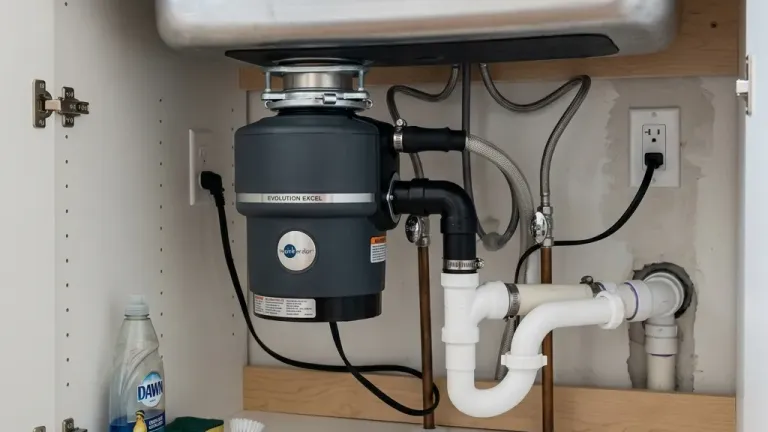
Garbage disposals are not recommended for homes on private septic systems by the majority of residential wastewater engineers, septic service professionals, and state extension programs in the U.S.
This isn’t a fringe position or consumer preference — it reflects a documented impact on septic tank biology and drain field longevity that compounds over years of regular use.
If you already have a disposal and use it regularly, this article explains what that means for your system and what you can do to mitigate the impact. If you’re building or renovating and considering one, it provides the information you need to make an informed decision.
What a Garbage Disposal Actually Does to Your Septic Tank
A garbage disposal grinds food waste into fine particles — typically 2–5mm in diameter — before sending them through the drain line and into the septic tank.
The problem is not the particle size. The problem is the type and volume of organic material entering the tank.
A healthy septic tank operates on a biological equilibrium: naturally occurring bacteria digest incoming organic waste at approximately the rate at which new waste is introduced. When that equilibrium is maintained, sludge accumulation is gradual and predictable.
Food waste — particularly fats, oils, proteins, and starches — disrupts this equilibrium in three ways:
1. Organic Loading Beyond Biological Capacity
The bacterial populations in a residential septic tank are calibrated for human waste volumes typical of the household size. Food waste from a garbage disposal adds 20–40% more organic material to that load, depending on household use patterns. This excess material accumulates as sludge faster than bacteria can process it.
2. Fats, Oils, and Grease (FOG) Acceleration
Even “clean” food waste contains fats and oils. When heated from cooking and then cooled as they travel through drain lines, these compounds solidify and accumulate in the scum layer. Over time, a heavy scum layer can block the inlet baffle and force partially digested effluent toward the drain field. Read our detailed explanation of how cooking grease affects septic systems.
3. Starches and Fibrous Materials
Starchy foods (pasta, rice, potatoes) swell in water and form dense, paste-like deposits. Fibrous vegetables (celery, corn husks, artichoke leaves) resist bacterial breakdown entirely and accumulate as inert solids. Both accelerate the rate at which the tank requires pumping.
The Drain Field Risk
The more serious concern isn’t tank capacity — it’s what reaches the drain field.
When a tank’s biological capacity is exceeded due to excess organic loading, partially digested effluent exits into the drain field carrying fine organic particles that would normally have been broken down in the tank. These particles accumulate at the soil interface and contribute to biomat formation — the dense microbial layer that progressively reduces soil permeability.
Advanced biomat is the primary cause of drain field failure. Unlike a full tank, a failed drain field cannot simply be pumped — it requires either biological remediation ($300–$2,000) or mechanical aeration/replacement ($5,000–$25,000). For a complete overview of drain field failure causes and warning signs, see our dedicated article on drain field warning signs.
“We consistently see accelerated drain field failure in septic systems serving homes with active garbage disposals. The FOG loading alone from typical kitchen disposal use can reduce drain field lifespan by 20–35% compared to a matched home without disposal use. For older systems and smaller tanks, the effect is even more pronounced.”
What If You Already Have a Disposal — And Use It?
If your home is already equipped with a garbage disposal and you use it regularly, you have practical options:
Option 1: Significantly Reduce Use
Use the disposal only for incidental food residue — the small bits that remain after scraping plates. Avoid using it for large amounts of food waste: uneaten portions, vegetable scraps, starchy foods, or anything with significant fat content.
Even reducing disposal use by 70% meaningfully reduces the organic loading impact.
Option 2: Increase Monitoring Frequency
If you continue regular disposal use, plan to have your sludge depth measured every 12–18 months rather than every 2–3 years. This allows you to catch accumulation before it reaches critical levels and pump on a condition-based schedule rather than being caught off-guard.
Option 3: Strengthen Tank Biology
A biologically healthy tank handles elevated organic loads more effectively than a depleted one. Regular introduction of aerobic bacterial populations — which process organic material more efficiently than naturally occurring anaerobic bacteria — can partially offset the additional load from disposal use. The biological science behind this approach is explained in our comparison of bio-remediation versus mechanical pumping.
Option 4: Compost Instead
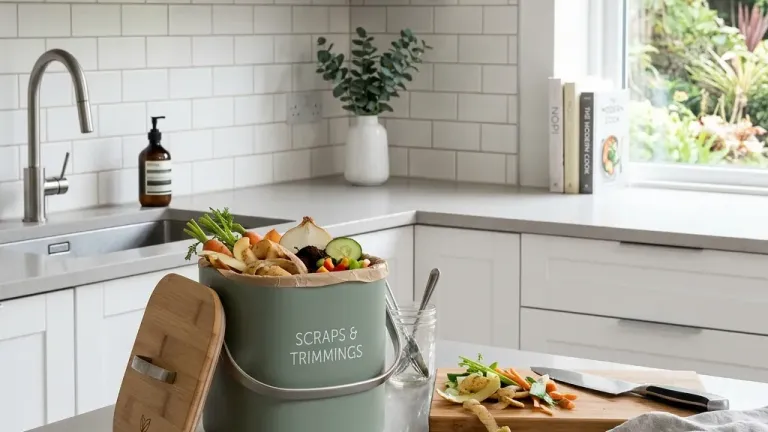
Kitchen composting handles the same food waste stream that a disposal would process, without any impact on the septic system. Countertop composting bins are inexpensive and largely odor-free with proper management. For homes on private septic systems, composting is the recommended alternative by most state extension programs.
Septic-Specific Garbage Disposals: Do They Help?
Several manufacturers sell “septic-assist” garbage disposals that add a measured dose of bacterial or enzymatic product with each use. Independent testing of these products has produced mixed results.
The honest assessment: the biological additive doses in these units are too small to meaningfully offset the organic loading impact of regular food waste grinding. They may slightly improve breakdown of soft, starchy material, but they do not address FOG accumulation, fibrous solids, or the fundamental issue of excess organic load.
If you want to protect your septic tank’s biological health, a dedicated monthly biological treatment program is significantly more effective than a disposal-integrated additive system. For a breakdown of how these treatments compare, see our review of septic tank treatment approaches.
Key Takeaways
- Most wastewater engineers advise against garbage disposal use with private septic systems — this reflects documented impact, not preference.
- Regular disposal use generates 50% more sludge annually and increases inlet baffle clogging rates significantly.
- The more serious long-term risk is the contribution of partially digested food waste to drain field biomat formation.
- If you use a disposal, reduce usage to incidentals only, increase inspection frequency, and support tank biology actively.
- Kitchen composting is the most effective alternative for homes on private septic systems.
Free Homeowner Tools
- Annual Cost Estimator — Calculate the long-term cost impact of your current maintenance approach.