
Average Septic Tank Lifespan: How Long Will Yours Last?
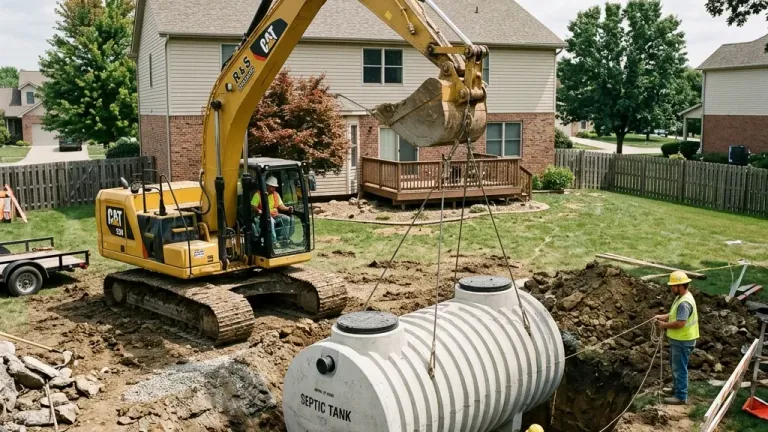
The Honest Answer to a Question Most Homeowners Ask Too Late
Most homeowners don’t think about their septic tank’s lifespan until something goes wrong. At that point, they’re often looking at either a significant repair or a full replacement — a project that can run from $3,000 to $15,000 for the tank alone, plus drain field costs if the system has failed entirely.
The realistic life expectancy of a residential septic system depends on three variables:
- Material and construction quality of the tank
- Soil and groundwater conditions at the installation site
- Maintenance history — pumping frequency, biological health, and what enters the system
The first two are largely fixed at the time of installation. The third is entirely within the homeowner’s control — and it’s the variable with the largest practical impact on whether a system lasts 20 years or 50.
Lifespan by Tank Material
Different septic tank materials have different baseline structural lifespans:
↔ Scroll horizontally to see full comparison table
| Material | Structural Lifespan | Notes |
|---|---|---|
| Precast concrete | 25–50+ years | Most common U.S. residential type. Susceptible to cracking from soil movement and hydrogen sulfide corrosion. |
| Fiberglass | 30–40 years | Resistant to corrosion; can shift in high-water-table soils. |
| Polyethylene (plastic) | 30–40 years | Lightweight; corrosion-resistant; limited to smaller capacity sizes. |
| Steel | 15–25 years | Corrodes from hydrogen sulfide exposure. Now largely discontinued for new installations. |
| Brick / Block (pre-1970s) | 20–30 years | Found in older homes; prone to mortar degradation and infiltration. |
What Actually Shortens a Septic Tank’s Life
Understanding what accelerates degradation is more actionable than the baseline lifespan figures.
Infrequent Pumping
When sludge and scum layers are not removed on schedule, several failure mechanisms accelerate:
- Overfull tanks allow solids to migrate to the drain field, accelerating field failure
- High organic loading increases H₂S production, accelerating structural corrosion in concrete tanks
- Baffle components (inlet and outlet baffles) become submerged in solids and begin to fail
Baffle failure is particularly consequential. When the inlet or outlet baffle deteriorates, solids bypass the tank’s separation zones and move directly into drain field lines — dramatically accelerating drain field failure. Baffle replacement costs $150–$600; drain field remediation costs $5,000–$25,000.
Poor Water Management
Excessive water volume entering the system from leaking toilets, dripping faucets, and water softener discharge creates hydraulic overload that:
- Shortens the retention time inside the tank (solids don’t have adequate time for biological processing)
- Increases erosive pressure on tank sidewalls and baffles
- Accelerates drain field saturation
A single leaking toilet can introduce 200+ gallons of excess water into the system daily — equivalent to doubling the load of one household member.
The impact of water softeners on septic systems deserves specific attention: the brine discharge from regeneration cycles introduces high-sodium water that can disrupt bacterial populations and affect soil permeability in the drain field over time. This is covered in detail in our article on water softeners and septic systems.
Chemical and Medication Exposure
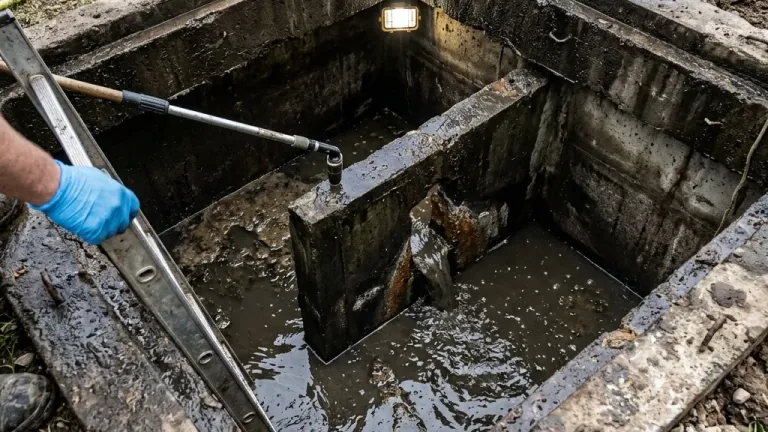
Harsh household chemicals — bleach-based cleaners, lye drain openers, antibacterial soaps — that enter the tank suppress bacterial populations responsible for solid breakdown. A chronically depleted bacterial population increases the rate of sludge accumulation, which in turn accelerates the corrosion cycle described above.
Prescription antibiotics are another factor: regular antibiotic use by household members can partially sterilize the tank’s bacterial ecosystem, reducing its biological processing efficiency for weeks after each course. The full scope of this issue is explained in our article on medications and septic system health.
Soil and Tree Root Intrusion
Mature trees within 30–50 feet of the septic tank can extend root systems into the tank, baffle components, or distribution lines. Root intrusion creates structural breaches that allow groundwater infiltration into the tank (adding to hydraulic load) and effluent exfiltration from the tank (a potential groundwater contamination issue).
Willow, poplar, and silver maple species are particularly high-risk due to their aggressive, water-seeking root systems. If trees of these species exist near your tank or drain field, periodic inspection of distribution lines is advisable.
Warning Signs That a Tank Is Approaching End of Life
Unlike sudden mechanical failures, septic tank deterioration provides advance warning. The signs to watch for in an aging system:
Structural indicators:
- Access lid cracking or settling (indicates ground movement affecting the tank)
- Visible rust staining around lid areas (steel tanks nearing end of life)
- Effluent odors persisting after recent pumping (may indicate baffle failure)
- Uneven ground settling over the tank area (possible structural collapse — treat as urgent)
Operational indicators:
- Increasingly frequent pumping requirements even with normal household behavior
- Recurring baffle replacement needs
- Persistent drain field wetness despite recent pumping
If your system is older than 25 years and showing any of these signs, a full system inspection — including camera inspection of distribution lines — is warranted. Our guide to reading your septic inspection report helps you interpret what the inspector finds.
How Maintenance Directly Extends Operational Lifespan
The difference between a tank that lasts 20 years and one that lasts 40 years is almost entirely attributable to maintenance practices.
The maintenance factors with the greatest documented impact:
Regular pumping on a condition-based schedule removes sludge and scum before they reach the level that accelerates baffle deterioration and drain field loading. For most households, this means inspection every 2–3 years and pumping when indicated by sludge depth — not on a fixed calendar. See our detailed guide on how often to pump your septic tank for the specifics.
Biological treatment support maintains an active aerobic bacterial population that processes organic solids more efficiently, reducing the H₂S production that drives concrete corrosion. Tanks that maintain biological health consistently show significantly lower rates of structural degradation over 10–20 year periods.
Water use discipline — fixing leaking fixtures, staggering laundry loads, and using water-efficient appliances — reduces hydraulic load and extends the effective retention time for biological processing.
“Our 15-year longitudinal study of residential septic systems found that the single most predictive variable for system lifespan was maintenance regularity — not installation quality, not soil type, not climate. Systems with documented biannual inspections and condition-based pumping had a median operational lifespan 60% longer than systems with reactive maintenance records.”
When Replacement Is the Right Decision
There are conditions under which repair is not cost-effective and full replacement is the rational choice:
- Steel tanks beyond 20 years: Structural failure is imminent; replacement is more economical than ongoing repair
- Concrete tanks with significant baffle failure and drain field saturation occurring simultaneously: The combined remediation cost often approaches or exceeds replacement
- Systems undersized for current household load: If a home has been expanded significantly since installation, the original tank capacity may be insufficient and an upgrade warranted
- Pre-1970s block or brick tanks: Mortar degradation, infiltration, and inconsistent structural integrity make these systems candidates for replacement at first major failure
For newer systems showing early warning signs, biological and mechanical intervention is usually the better economic choice. The comparison between bio-remediation approaches and mechanical alternatives is covered in our article on bio-remediation versus pumping.
Key Takeaways
- Concrete septic tanks can structurally last 25–50+ years; operational lifespan depends almost entirely on maintenance.
- H₂S corrosion, baffle failure from infrequent pumping, and drain field loading are the primary failure mechanisms.
- Condition-based pumping, active biological support, and controlled water use are the three highest-impact maintenance interventions.
- Steel tanks beyond 20 years and pre-1970s masonry tanks are approaching structural end of life regardless of maintenance.
- A 15-year longitudinal study found that maintenance regularity predicted septic system lifespan more reliably than any other variable.
When Will Your Septic Tank Fail?
Enter your tank's age, material, and maintenance history to calculate its remaining structural and operational lifespan.
Read the Full GuideFree Homeowner Tools
- Annual Cost Estimator — Model the long-term costs of your current maintenance approach versus a proactive schedule.
- Drain Field Risk Diagnostic — Assess whether your aging system is showing early drain field stress indicators.