
How Everyday Medications Affect Your Home Septic System
The Scale of the Problem
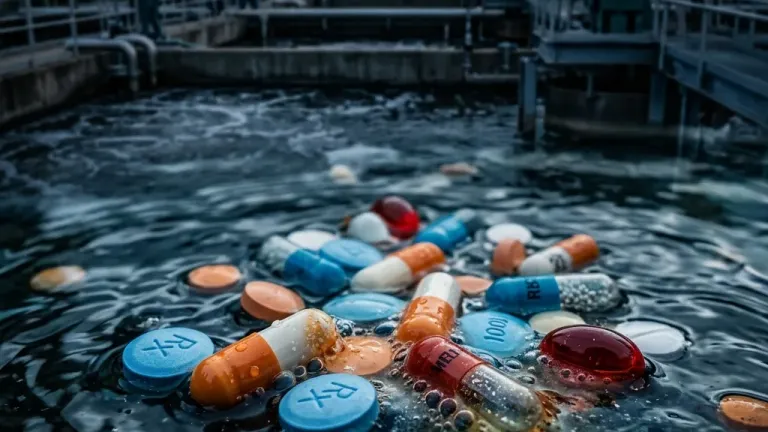
Americans fill approximately 4 billion prescriptions annually, consuming medications for chronic conditions including cardiovascular disease, diabetes, depression, anxiety, hormonal disorders, and infections. The human body metabolizes a portion of each dose — but a significant fraction passes through unchanged or as active metabolites and enters the wastewater stream through normal urinary and fecal excretion.
For the 21 million households on private septic systems, this pharmaceutical effluent does not travel to a municipal treatment facility capable of advanced filtration. It enters a residential septic tank, receives biological treatment of limited scope, and ultimately percolates through a drain field into the local groundwater table.
This is not a sensationalized concern. It is a documented, peer-reviewed environmental reality that has significant implications for homeowners drawing well water in proximity to their own or neighboring septic systems.
What the Septic Tank Does — and Doesn’t — Do
A residential septic tank is designed to achieve two things: separate solids from liquids through gravity settling, and partially break down organic matter through biological digestion. It was engineered for this purpose in the mid-20th century, long before synthetic pharmaceutical compounds existed at any meaningful scale in residential wastewater.
The biological population of a septic tank — whether dominated by anaerobic or aerobic bacteria — has some capacity to degrade certain pharmaceutical compounds through a combination of hydrolysis, biodegradation, and sorption (binding to settled solids). Read about how different bacterial strains process pharmaceuticals. However, this capacity is highly compound-specific:
Compounds that degrade reasonably well in septic systems:
- Some antibiotics (beta-lactams like amoxicillin) are relatively unstable and degrade through hydrolysis
- Some pain medications (ibuprofen) show moderate biodegradation
- Some cardiovascular drugs show partial removal through sorption to sludge
Compounds that are poorly removed:
- Synthetic estrogens (from hormonal contraceptives, hormone replacement therapy) — among the most studied and most persistent pharmaceutical contaminants in environmental systems
- Antibiotics in the quinolone and sulfonamide classes — highly stable and resistant to biodegradation
- Psychiatric medications (SSRIs, benzodiazepines) — show low removal rates in conventional septic treatment
- Metformin (diabetes medication) — very high usage, very high environmental persistence
The Groundwater Pathway
After exiting the septic tank, effluent travels to the drain field, where it percolates through layers of gravel and soil before entering the groundwater table. Soil passage does provide some additional pharmaceutical removal through:
- Sorption — compounds binding to soil particles and organic matter
- Microbial degradation — soil bacteria with different metabolic capabilities than tank bacteria degrading some compounds
- Photodegradation — minimal, as UV exposure does not occur underground
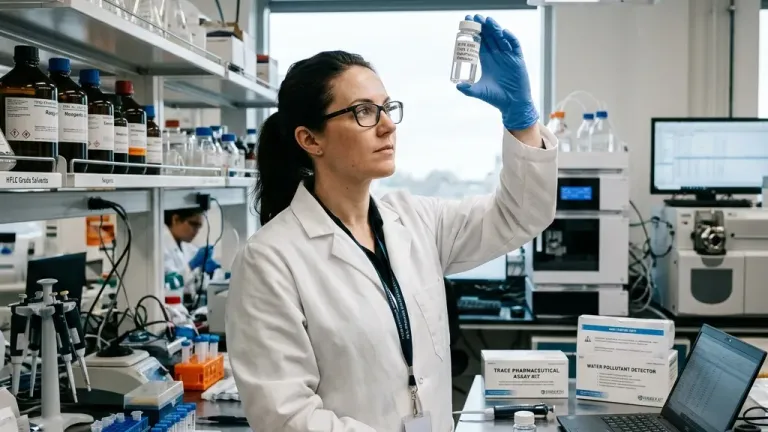
However, the soil treatment zone in a residential drain field — typically 2 to 4 feet of unsaturated soil above the water table — is insufficient to fully remove most persistent pharmaceutical compounds. Studies measuring pharmaceutical concentrations in groundwater samples from properties with on-site septic systems have detected measurable concentrations of synthetic hormones, antibiotics, anticonvulsants, and psychiatric medications at distances of 50 to 150 feet from drain field perimeters.
The Antimicrobial Resistance Connection
One of the more significant environmental concerns associated with pharmaceutical contamination through septic effluent is the role of antibiotic compounds in promoting antimicrobial resistance (AMR) in environmental bacterial populations.
When antibiotic compounds at sub-therapeutic concentrations are present continuously in soil and groundwater systems, they create selection pressure on environmental bacteria. Strains that carry resistance genes survive and proliferate; sensitive strains are suppressed. This suppression can also be detected by professionals; learn the inspection signs of a chemically suppressed tank. This is the same mechanism that produces antibiotic-resistant bacteria in clinical settings — applied at the environmental scale.
The residential septic system is one pathway through which antibiotics prescribed to individual household members enter the broader environment and contribute to this selection pressure. If bacteria die off in large numbers, it can lead to clogging; read how dead bacteria lead to biomat buildup.
What Homeowners Can Do
The realistic options for mitigating pharmaceutical contamination through a residential septic system are limited by the fundamental design constraints of the system — but several measures help:
Proper medication disposal: Unused medications should be disposed of through DEA-authorized take-back programs (pharmacies and law enforcement agencies), not flushed or poured down the drain. The FDA provides a list of approved take-back locations. This is the most impactful single behavioral change.
Maintain drain field setback distances from wells: Most states require minimum horizontal setback distances between septic drain fields and drinking water wells (typically 50 to 100 feet). Homeowners on properties near the minimum setback should consider annual well water testing for pharmaceutical indicators.
Support adequate biological activity in the tank: While conventional septic bacteria cannot remove most pharmaceutical compounds, maintaining a healthy, active biological ecosystem in the tank maximizes the removal of compounds that are biologically degradable. Focus on restoring bacterial balance after heavy medication use and consider biological treatments that help systems recover.
Annual well water testing: Homeowners drawing private well water within 200 feet of any septic drain field — their own or neighboring properties — should consider periodic testing for pharmaceutical compound panels, available from certified environmental testing laboratories.
The intersection of pharmaceutical use and private septic system discharge is an emerging area of environmental concern that will likely attract increasing regulatory attention over the coming decade. For current homeowners, awareness and behavioral adjustments represent the most practical available response.